Available Number of Questions: Maximum of
50 Questions
Exam Name: Adobe Commerce Architect Master Exam
Exam Duration: 100 Minutes
Related Certification(s):
Adobe Commerce Certification
Adobe AD0-E722 Exam Topics - You’ll Be Tested in Actual Exam
The Adobe AD0-E722 exam covers a range of topics essential for aspiring Adobe Certified Experts. It delves into Adobe Commerce solutions, including product catalog management, where you'll learn to create, edit, and organize products efficiently. The exam also explores customer management, teaching you how to segment and target audiences effectively. Additionally, it covers order management, teaching you to process and manage orders seamlessly. Marketing and promotional strategies are also a focus, with a deep dive into creating and executing successful campaigns. The exam touches on payment and fraud protection, ensuring you understand secure payment methods and fraud prevention. Moreover, it covers inventory management, helping you optimize stock levels and ensure product availability. Finally, the AD0-E722 exam assesses your understanding of business intelligence and analytics, enabling you to make data-driven decisions for your Adobe Commerce platform. With a comprehensive understanding of these topics, candidates can confidently approach the exam, knowing they have the knowledge and skills to excel in Adobe Commerce solutions.
Adobe AD0-E722 Exam Short Quiz
Attempt this Adobe AD0-E722 exam quiz to self-assess your preparation for the actual Adobe Commerce Architect Master Exam . CertBoosters also provides premium Adobe AD0-E722 exam questions to pass the Adobe Commerce Architect Master Exam in the shortest possible time. Be sure to try our free practice exam software for the Adobe AD0-E722 exam.
1of 0 questions |
Adobe AD0-E722 Exam Quiz
✓ 0 answered
🔖 0 bookmarked
AdobeAD0-E722
Q1:
An Adobe Commerce Architect is asked by a merchant using B2B features to help with a configuration issue.
The Architect creates a test Company Account and wants to create Approval Rules for orders. The Approval Rules tab does not appear in the Company section in the Customer Account Menu when the Architect logs in using the Company Administrator account.
Which two steps must be taken to fix this issue? (Choose two.)
☐
ASet 'Enable B2B Quote' in the B2B Admin to TRUE
☐
BMerchant needs to log out of frontend and then log back in to load new permissions
☐
CSet 'Enable Purchase Orders' in the B2B Admin to TRUE
☐
DSet 'Enable Purchase Orders' on the Company Record to TRUE
☐
EMake sure that the 'Purchase Order' payment method is active
AdobeAD0-E722
Q2:
An Adobe Commerce Architect designs and implements functionality that introduces a new Complex Product Type to the existing Adobe Commerce website. Besides visual demonstration of the new product type, the changes include adjustments to the price index.
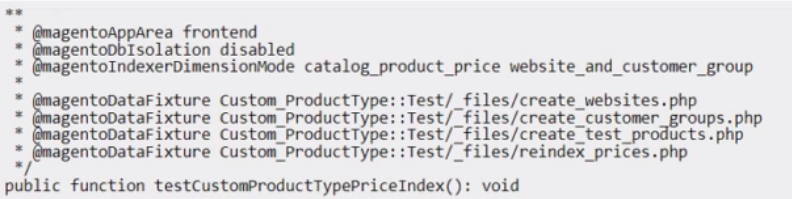
The website utilizes a multi-dimensional indexer feature to store the price index. The Architect decides to cover it with integration tests. After creating and running one test, the Architect discovers that database storage is not being fully cleaned.
The test method has the following annotation declaration:
Which adjustment should the Architect make to fix this issue?
○
AAdd annotation @magentoApplsolation enabled to method PHPDoc
○
BModify method PHPDoc and change annotation @magentoDbIsolation to enabled
○
CCreate Customer_ProductType: :Test/_files/{fixture_name)_rollback.php for every fixture
AdobeAD0-E722
Q3:
The development of an Adobe Commerce website is complete. The website is ready to be rolled out on the production environment.
An Architect designed the system to run in a distributed architecture made up of multiple backend webservers that process requests behind a Load Balancer.
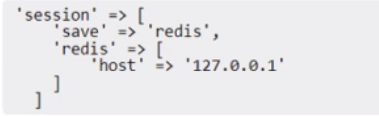
After deploying the system and accessing the website for the first time, users cannot access the Customer Dashboard after logging in. The website keeps redirecting users to the sign-in page even though the users have successfully logged in The Architect determines that the session is not being
saved properly.
In the "app/etc/env.php", the session is configured as follows:
What should the Architect do to correct this issue?
○
AUpdate the session host value to a shared Redis instance
○
Bincrease the session size with the command config:set system/security/max_session_size_admin
○
CUtilize the Remote Storage module to synchronize sessions between the servers
AdobeAD0-E722
Q4:
A merchant notices that product price changes do not update on the storefront.
The index management page in the Adobe Commerce Admin Panel shows the following:
* All indexes are set to 'update by schedule'
* Their status is 'ready'
* There are no items in the backlog
* The indexes were last updated 1 minute ago
A developer verifies that updating and saving product prices adds the relevant product IDs into the catalog_product_price_cl changelog table. Which two steps should the Architect recommend to the developer to resolve this issue? (Choose two.)
☐
AReduce the frequency of the cron job to 5 minutes so the items have more time to process.
☐
BMake sure that no custom or third-party modules modify the changelog and indexing process.
☐
CMake sure that the version_id for the price indexer in the mview_state table is not higher than the last entry for the same column in the changelog table and re-synchronize.
☐
DInvalidate the catalog_Product_price indexer in the Adobe Commerce Admin Panel so that it is fully reindexed next time the cron runs.
☐
EManually reindex the catalog_product_price index from the command line: bin/magento indexer:reindex catalog_product_price.
AdobeAD0-E722
Q5:
Due to a marketing campaign, a website is experiencing a very large number of simultaneously placed orders, which is affecting checkout performance. The website is in the production deploy mode.
Which two website settings can an Architect optimize to decrease the impact on checkout performance? (Choose two.)
☐
AAsynchronous indexing admin panel Setting (Stores > Settings > Configuration > Advanced > Developer > Grid Settings > Asynchronous indexing) can be enabled by executing the following CLI Command: bin/Magento config:set dev/grid/async_indexing 1
☐
BAsynchronous email notifications admin panel setting (stores > settings > configuration > sales > sales Emails > General settings > Asynchronous) can be enabled
☐
CA new database can be created and the Split Database feature can be automatically configured with the following command: bin/Magento setup:db-schema:spiit-sales --host'<checkout db host or ip>- --dbnanie''<name>' --username'<checkout db username)' --password'''
☐
DThe website deploy mode can be set to siege by executing the following CLI command: bin/Magento deploy:mode:set siege, provided that it will be changed back to production as soon as the number of simultaneously placed orders decreases to acceptable levels
☐
EMultithreaded checkout processing admin panel setting (stores > settings > configuration > sales > checkout > General settings > Asynchronous) can be set to a higher value representing the number of PHP threads used exclusively for checkout