Related Certification(s):
Cisco AppDynamics Certification
Cisco 500-420 Exam Topics - You’ll Be Tested in Actual Exam
Expect the exam to push you past pretty charts and into proving you can trace real slowness from the top of an app down to the exact place it starts. Most questions quietly assume you understand what agents see and do, because if you misread agent coverage you will chase the wrong problem. You need to recognize how business transactions are discovered, named, and grouped, since every later decision depends on whether the transaction model matches how users actually hit the app. Then the test turns the screws with dashboards, health policies, and snapshots, where you must tell the difference between a useful alert and noise, and know what evidence a snapshot gives you when a baseline is breached. Service endpoints and information points show up as the glue between broad transaction timing and the specific calls or methods adding latency, and collectors matter when the out of the box data is not enough to explain a spike. Troubleshooting is less about memorizing screens and more about choosing the next best check when symptoms conflict, like a slow transaction with normal CPU but rising downstream time. What trips people up is treating snapshots like a log dump instead of a structured story with timing, call graphs, and correlated events. Practice forming a hypothesis from one view and validating it in another, because the exam rewards that habit.
Cisco 500-420 Exam Short Quiz
Attempt this Cisco 500-420 exam quiz to self-assess your preparation for the actual Cisco AppDynamics Associate Performance Analyst exam. CertBoosters also provides premium Cisco 500-420 exam questions to pass the Cisco AppDynamics Associate Performance Analyst exam in the shortest possible time. Be sure to try our free practice exam software for the Cisco 500-420 exam.
1of 0 questions |
Cisco 500-420 Exam Quiz
✓ 0 answered
🔖 0 bookmarked
Cisco500-420
Q1:
What is the Node limit of the maximum Service Endpoints per node?
○
A50
○
B100
○
C250
○
D1000
Cisco500-420
Q2:
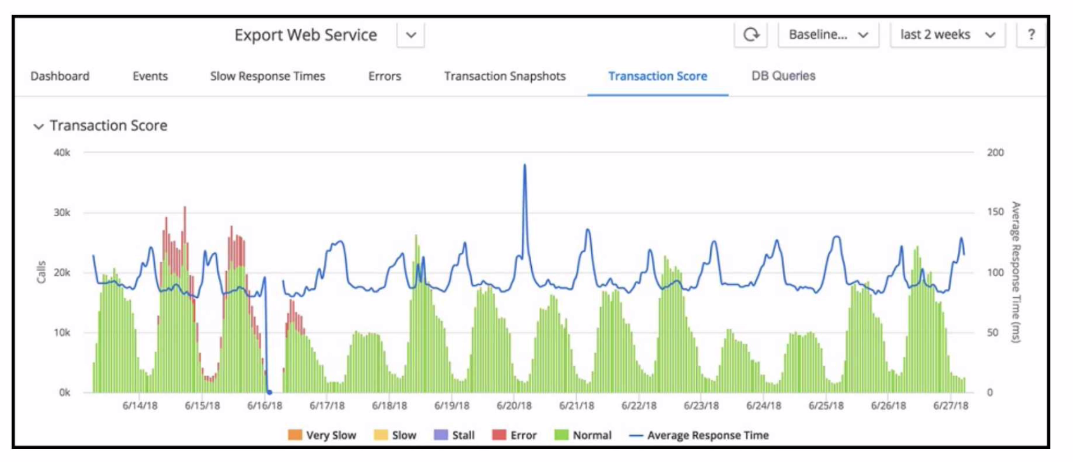
Refer to exihibit.
Refer to the exhibit. When looking at the Transaction Score for a specific transaction, how are errors in the transaction identified?
○
ASet the time range and drill down into the snapshots in the Error tab.
○
BSet the time range and examine the Slow Response Times tab.
○
CSet the time range and examine the dashboard for errors.
○
DSet the time range and drill down into the snapshots in the Events tab.
Cisco500-420
Q3:
Which three data points can be located by drilling down into a JDBC exit call for an Oracle backend? (Choose three.)
☐
AQuery type
☐
BStatement type
☐
CQuery Id
☐
DWeight %
☐
EOriginating node
☐
F%Time
Cisco500-420
Q4:
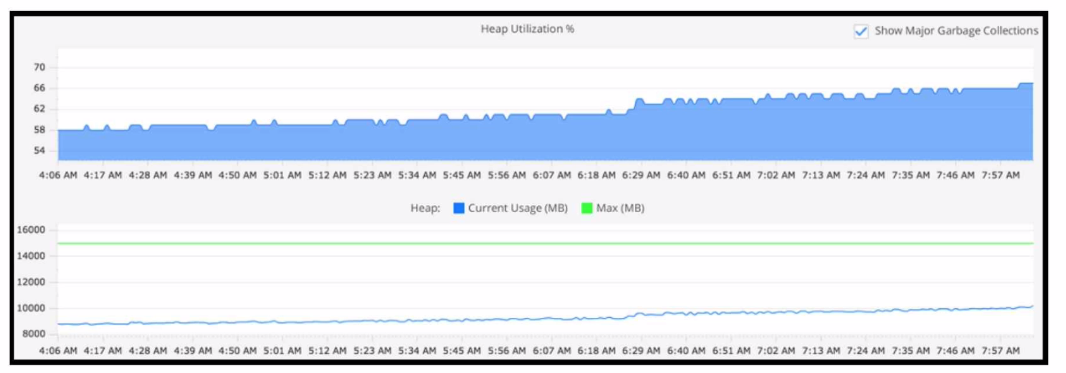
Refer to exhibit.
Refer to the exhibit. Using this heap utilization graph, which method is used to confirm if a memory leak is occurring during a certain time frame?
○
AIn metric browser go through Application Infrastructure > Hardware Resources and select Memory Total (MB) and Used (MB)
○
BRefer to the Tiers and Nodes section and into the Memory tab and visualize Heap Utilization (%) and Heap Current Usage (MB) Vs Max (MB)
○
CRefer to the Tiers and Nodes section and into the JMX tab and select JVM > Memory > Heap > Max Available (MB) and Current usage (MB)
○
DIn metric browser go through Application Infrastructure > Hardware Resources > Memory Total (MB) and Swap Used (MB)
Cisco500-420
Q5:
A team of developers deploys new Java servlet code that should create new business transactions in AppDynamics. After applying load on the new code function, there are no new Business Transactions on the Business Transaction Dashboard. Which two options should the developers check in AppDynamics to make sure the Business Transactions can be discovered?
[Choose two.)
☐
AThe metric browser to see if the new transactions appear under Business Transaction Performance.
☐
BThe tier with the new code does not have any rules excluding it.
☐
CAuto discovery for service endpoints is turned on.
☐
DThere is a health rule created to check for transaction performance.
☐
EAuto Discovery for servlet is turned on for Java agents.