Available Number of Questions: Maximum of
80 Questions
Exam Name: Trend Micro Certified Professional for Deep Security Exam
Related Certification(s):
Trend Micro Certified Professional for Deep Security Certification
Trend Deep-Security-Professional Exam Topics - You’ll Be Tested in Actual Exam
The Trend Deep-Security-Professional exam is a comprehensive assessment that evaluates your expertise in various aspects of security. It covers a wide range of topics, ensuring that you are well-prepared to handle the complexities of the modern security landscape. One of the key areas is security policies and compliance, where you'll delve into the creation and implementation of robust security policies, ensuring alignment with industry standards and regulations. This includes understanding different compliance frameworks and their requirements. Another crucial aspect is network security, which focuses on safeguarding your organization's network infrastructure. You'll learn about network segmentation, firewall configurations, and advanced techniques to protect against threats like DDoS attacks and unauthorized access. Endpoint protection is another critical topic, emphasizing the need to secure individual devices and systems. This involves deploying effective antivirus and anti-malware solutions, implementing strong authentication measures, and regularly updating and patching software to prevent vulnerabilities. The exam also emphasizes the importance of incident response planning. You'll explore strategies for detecting, containing, and mitigating security incidents, including developing an incident response team and creating a comprehensive response plan. Additionally, you'll gain insights into cloud security best practices, ensuring that your organization's cloud-based assets are protected. This includes understanding cloud-specific threats and implementing secure cloud configurations. Furthermore, the exam covers security awareness and training, recognizing the human element as a potential vulnerability. You'll learn how to create effective security awareness programs and train employees to recognize and respond to potential threats. Lastly, security monitoring and analytics play a vital role, as you'll discover advanced techniques for detecting and analyzing security events. This includes utilizing SIEM (Security Information and Event Management) systems and applying machine learning algorithms for threat detection.
Trend Deep-Security-Professional Exam Short Quiz
Attempt this Trend Deep-Security-Professional exam quiz to self-assess your preparation for the actual Trend Micro Certified Professional for Deep Security Exam . CertBoosters also provides premium Trend Deep-Security-Professional exam questions to pass the Trend Micro Certified Professional for Deep Security Exam in the shortest possible time. Be sure to try our free practice exam software for the Trend Deep-Security-Professional exam.
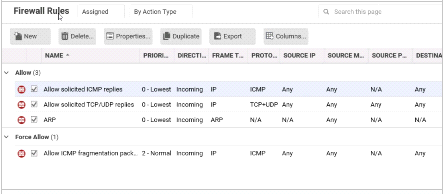
While viewing the details of the Firewall Protection Module, as displayed in the exhibit, you note that a few rules have already been assigned. You try to disable these rules, but they can not be unassigned. Why can the displayed rules not be unassigned?
○
AThe rules displayed in the exhibit have been hard-coded with the details of the policy. These rules will automatically be assigned to all Firewall policies that are created and can not be unassigned.
○
BThe rules displayed in the exhibit have been assigned to the policy at the parent level. Rules assigned to a parent policy can not be unassigned at the child level.
○
CThe rules displayed in the exhibit were assigned to the policy automatically when a Recommendation Scan was run. Rules assigned through a Recommendation Scan can not be disabled once assigned.
○
DThe rules displayed in the exhibit can not be unassigned as the administrator currently logged into the Deep Security Manager Web console does not have the permissions necessary to unassign rules.
TrendDeep-Security-Professional
Q2:
Which of the following correctly identifies the order of the steps used by the Web Reputation Protection Module to determine if access to a web site should be allowed?
○
AChecks the cache. 2. Checks the Deny list. 3. Checks the Approved list. 4. If not found in any of the above, retrieves the credibility score from Rating Server. 5. Evaluates the credibility score against the Security Level to determine if access to the web site should be allowed.
○
BChecks the cache. 2. Checks the Approved list. 3. Checks the Deny list. 4. If not found in any of the above, retrieves the credibility score from the Rating Server. 5. Evaluates the credibility score against the Security Level to determine if access to the web site should be allowed.
○
CChecks the Deny list. 2. Checks the Approved list. 3. Checks the cache. 4. If not found in any of the above, retrieves the credibility score from Rating Server. 5. Evaluates the credibility score against the Security Level to determine if access to the web site should be allowed.
○
DChecks the Approved list. 2. Checks the Deny list. 3. Checks the cache. 4. If not found in any of the above, retrieves the credibility score from the Rating Server. 5. Evaluates the credibility score against the Security Level to determine if access to the web site should be allowed.
TrendDeep-Security-Professional
Q3:
How can you prevent a file from being scanned for malware?
○
AEnable 'File Types scanned by IntelliScan' in the Malware Scan Configuration prop-erties in the Deep Security Manager Web console. Click 'Scan All Except' and type the filename to exclude from the scan.
○
BEdit the 'Scan Exclusions' section of the dsa.properties configuration file on the Deep Security Agent computer to include the file name. Save the configuration file and restart the Deep Security Agent service.
○
CAdd the file to the Exclusions list in the Malware Scan Configuration.
○
DAdd the file to the Exclusions list in the 'Allowed Spyware/Grayware Configuration'.
TrendDeep-Security-Professional
Q4:
Which of the following correctly describes the Firewall rule Action of Force Allow?
○
AForce Allow permits traffic that would otherwise be denied by other Firewall rules to pass, but still enforces filtering by the Intrusion Prevention Protection Module.
○
BForce Allow permits traffic to bypass analysis by both the Firewall and Intrusion Pre-vention Protection Modules.
○
CForce Allow explicitly allows traffic that matches the Firewall rule to pass, and implicitly denies all other traffic.
○
DForce Allow permits traffic to bypass analysis by all Deep Security Protection Modules.
TrendDeep-Security-Professional
Q5:
A Recommendation Scan is run to determine which Intrusion Prevention rules are appropriate for a Server. The scan is configured to apply the suggested rules automatically and ongoing scans are enabled. Some time later, an operating system patch is applied. How can you de-termine which Intrusion Prevention rules are no longer needed on this Server?
○
AThe READ ME file provided with the software patch will indicate which issues were addressed with this release. Compare this list to the rules that are applied to determine which rules are no longer needed and can be disabled.
○
BSince the rules are being applied automatically, when the next Intrusion Prevention Recommendation Scan is run automatically, any rules that are no longer needed will be automatically unassigned. These are rules that are no longer needed as the vulnerability was corrected with the patch.
○
CSince there is no performance effect when multiple Intrusion Prevention rules are ap-plied, there is no need to determine which rules are no longer needed. The original rec-ommended rules can remain in place without affecting the system.
○
CSince the rules are being applied automatically, when the next Intrusion Prevention Recommendation Scan is run automatically, any rules that are no longer needed will be displayed on the Recommended for Unassignment tab in the IPS Rules. These are rules that are no longer needed and can be disabled as the vulnerability was corrected with the patch.